

Brightening / Melasma / Redness / Blemishes[Lentigo Laser] Lentigo Removal
![[Lentigo Laser] Lentigo Removal](/_next/image?url=https%3A%2F%2Ffirebasestorage.googleapis.com%2Fv0%2Fb%2Fkkeutguro-7e583.firebasestorage.app%2Fo%2Fproducts%252Fbssm%252Fen%252F1777436633728_649c8448-a034-4272-aa43-d677cd191f35_____________.webp%3Falt%3Dmedia%26token%3D29b2ab78-b755-4db6-85b7-9ec4e227bc52&w=2048&q=75)
[Lentigo Laser] Lentigo Removal
Intensive lentigo laser treatment for busy modern individuals A laser program designed for lentigo improvement with a relatively short treatment time * VAT separate
Options
Treatment Details
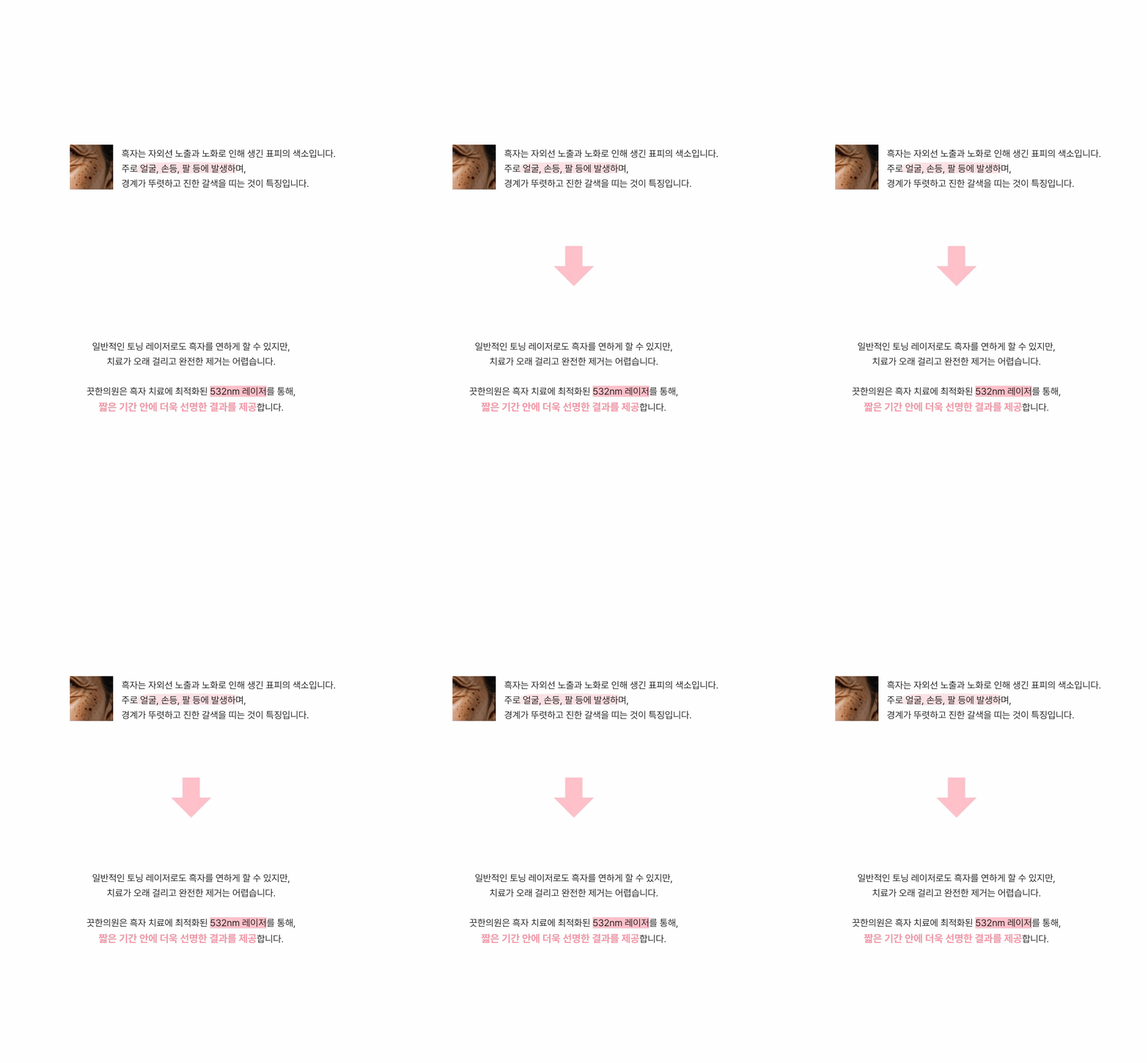
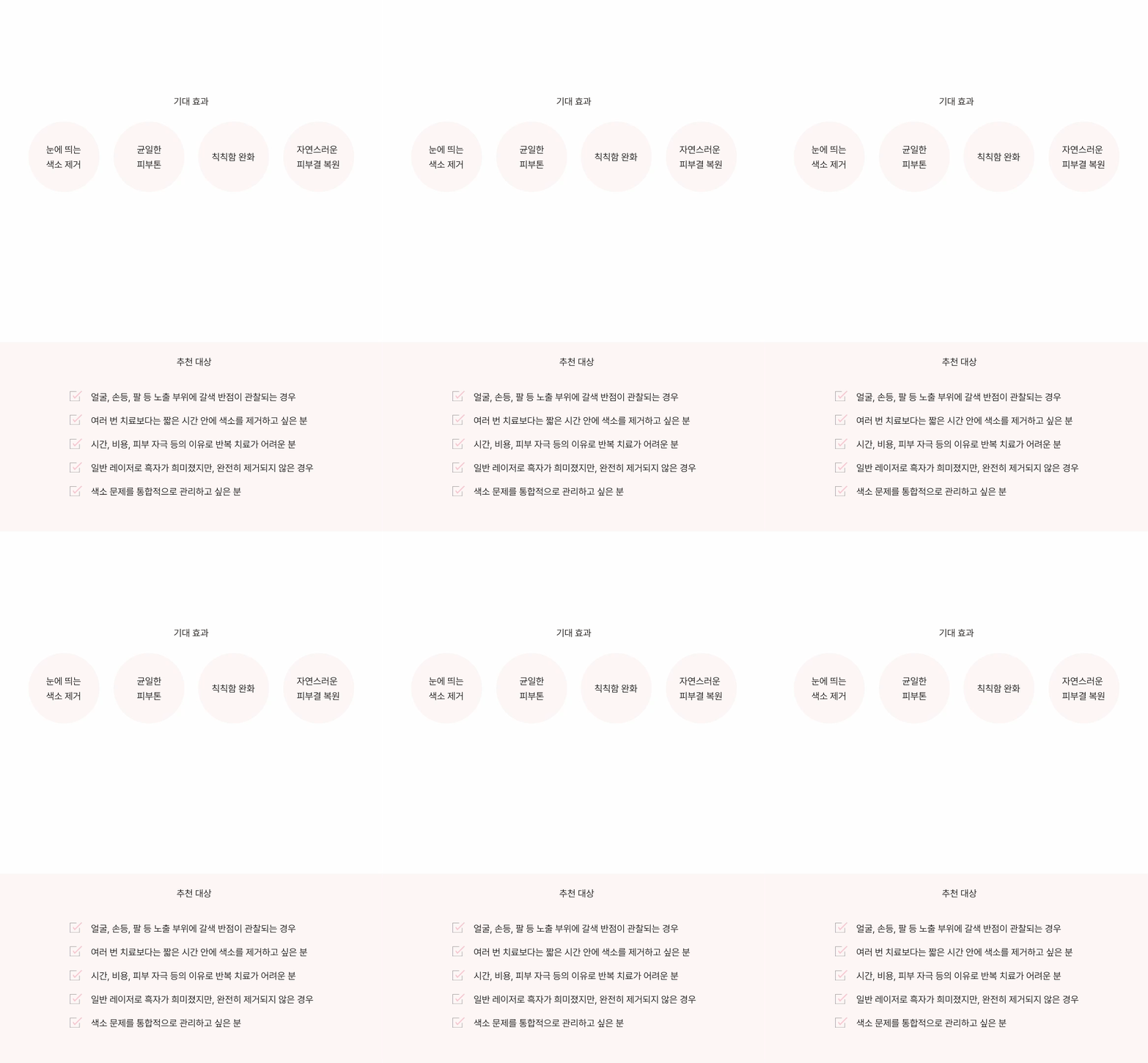
Key Differentiator 1: Solar Lentigo Laser Treatment for Expected Improvement in a Short Period
The solar lentigo treatment process can be completed in a relatively short period.
At our clinic, we primarily use a 532nm Nd:YAG laser to precisely treat dark and distinct solar lentigo lesions.
When necessary, a secondary Er:YAG erbium laser can be used to delicately manage any remaining faint pigmentation.
Typically, treatment is often completed in 2 to 3 sessions.
Based on accurate diagnosis and treatment planning, we aim to reduce the burden of unnecessary repeated treatments and achieve efficient improvement.
Our clinic's solar lentigo treatment offers satisfactory improvement through a personalized approach.
Key Differentiator 2: Our Commitment to Meticulous and Detailed Care
At our clinic, we prioritize the quality of treatment, strictly limiting the number of patients seen by a single doctor per day.
This is our clinic's careful decision to dedicate sufficient time and focus to each patient.
This operational approach allows us to provide thorough explanations and create personalized plans from consultation to treatment and post-care. Furthermore, we ensure ample time to delicately observe each patient's skin condition and response, and incorporate this into the treatment.
As a result, the precision of treatment is enhanced, patient satisfaction can increase, and this leads to meticulous medical service rather than simply repetitive consultations.
At our clinic, we value individual improvement over time, and genuinely focus on the skin of each and every patient.
Key Differentiator 3: Personalized Adjustment of Treatment Settings
By closely understanding factors such as the patient's skin tone, lesion size and depth, and skin reactivity, we delicately adjust the spot size, pulse energy, and fluence.
For example, for brighter skin with shallow pigmentation, we meticulously irradiate with a small spot size and high energy, while for skin prone to post-inflammatory hyperpigmentation, we adjust the output to ensure a safe treatment.
Such careful settings can enhance the precision of treatment and contribute to increased patient satisfaction, even when using the same laser equipment, making it
one of the important factors.
Key Differentiator 4: Meticulous Design of Post-Treatment Recovery Process
As 532nm laser treatment shows a rapid response, scabs or temporary redness may occur after the procedure. Therefore, it is crucial to pay special attention to regeneration care and UV protection.
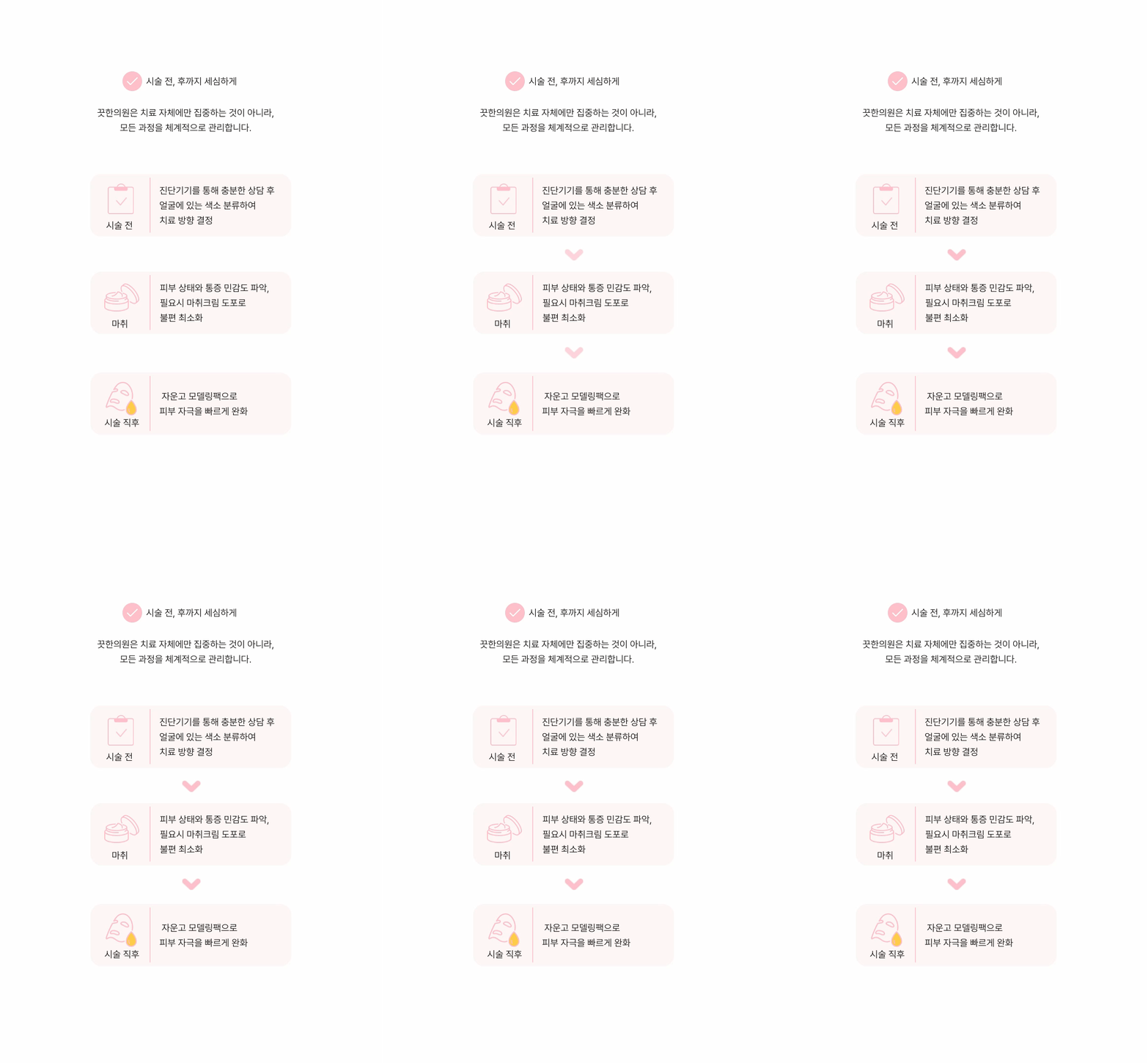
Individual patient sensitivity to pain during 532nm laser and secondary erbium laser treatments may vary. Accordingly, the application of anesthetic cream is decided during pre-consultation, and after the procedure, cooling treatment and Jau-ungo modeling packs are used to help soothe the skin.
Additionally, Duoderm is provided within the clinic to aid in the recovery of the treated area and protect the skin from UV rays.
Key Differentiator 5: Treatment Plan Considering Overall Pigmented Lesions Beyond Solar Lentigo
Many patients who visit our clinic for solar lentigo removal often have other dermal pigmented lesions, such as melasma, in addition to solar lentigo.
While treatments focused solely on solar lentigo are important, many patients tend to desire overall improvement of uneven pigmentation across their entire face.
Accordingly, through thorough consultation with the patient and the use of precise diagnostic equipment, we accurately classify the facial pigmented lesions. Subsequently, we jointly decide on the treatment direction, whether to treat only epidermal pigmentation or to consider overall pigment improvement.
Through this approach, patients can expect an overall improvement in their skin tone.
Causes of Solar Lentigo
Solar Lentigo (Solar Lentigo) refers to flat, brown pigmented lesions that primarily result from the complex interplay of UV exposure and the natural skin aging process.
This signifies a state where melanocytes are excessively activated, leading to a concentrated deposition of melanin pigment in specific areas.
Prolonged and repeated exposure to UV light continuously promotes melanin production,
and as we age, the skin's regenerative capacity and pigment metabolism decline, which can cause the pigmentation to darken and the lesions to widen over time.
They primarily appear on sun-exposed areas such as the face, back of the hands, and arms, and are generally characterized by clear borders and a dark brown color.
Location of Solar Lentigo Lesions
Solar lentigo (solar lentigo) primarily appears localized to the epidermis, the outermost layer of the skin.
Specifically, melanocytes located in the basal layer of the epidermis become excessively stimulated and activated by UV radiation,
appearing as melanin pigment concentrated and accumulated in specific areas.
Histopathologically, solar lentigo does not penetrate the dermis but shows excessive melanin deposition within the epidermis.
It is typically characterized by relatively distinct borders compared to the surrounding normal skin tissue.
Due to these characteristics, they often show a positive response to treatments targeting the epidermal layer, such as Q-switched 532nm lasers.
These pigmented lesions are classified differently from melasma, which affects the dermis deeply, or complex pigmentation issues.
532nm Laser Wavelength
The 532nm wavelength is a green wavelength with good melanin absorption, and it selectively reacts to pigmented lesions that primarily appear in the epidermal layer of the skin.
Generally, 532nm lasers are applied using a Q-switched method. This method helps to precisely destroy only pigment particles by delivering high-power energy for a very short duration of several nanoseconds.
Such short-pulse energy is selectively absorbed by melanin, transforming into thermal energy, while simultaneously causing a photomechanical shock effect. As a result, melanin particles can be effectively broken down.
Some of the decomposed pigment forms into tiny scabs and naturally falls off, or is expelled from the body via the lymphatic system through the action of macrophages.
As the destroyed pigment is removed through this process, you can expect improvement such as the lentigo visibly fading or disappearing.
Kkeut Clinic Lentigo Removal
Lentigo laser treatment utilizes wavelengths useful for improving lentigo lesions, but
However, satisfactory results from the treatment are not determined solely by wavelength selection.
Only when supported by an integrated treatment plan, including accurate diagnosis and treatment settings customized to each individual's skin condition,
can more positive results for lentigo improvement truly be expected.
진료 절차 안내
첫 상담부터 마무리까지의 실제 진행 순서를 확인하세요.
- 01
피부 표면 정돈을 위한 자가 세안
- 02
마크뷰(Mark-Vu)를 활용한 정밀 피부 분석
- 03
피부과 전문의와의 개별 맞춤 상담
- 04
개인별 피부 상태를 고려한 파라미터 설정 및 레이저 시술 진행
- 05
시술 부위 보호 및 진정을 위한 재생 크림 도포
시술 기본정보
시술 시간, 마취, 회복, 유지기간을 한 번에 확인하세요.
TIME
부위별 10~15분
ANESTHESIA
마취 없음
RECOVERY
일상생활 바로 가능
Q&A
고객님들이 가장 많이 물어보시는 내용을 모았습니다.
I'm curious about the typical interval between treatments.

Generally, it is common to proceed once every 3 to 4 weeks. This is to consider the skin's natural regeneration cycle and to observe changes in pigmentation in the treated area.
How many sessions are generally recommended for lentigo treatment?
Based on treatments using a 532nm laser, some degree of pigmentation improvement can be observed in many cases with just 1 to 2 sessions. However, depending on individual skin characteristics, the depth or area of the lentigo, and usual sun exposure habits, an additional 2 to 3 sessions may be necessary.