


Acne / Pores / Scars[Erbium Fractional Laser] Faster Recovery
![[Erbium Fractional Laser] Faster Recovery](/_next/image?url=https%3A%2F%2Ffirebasestorage.googleapis.com%2Fv0%2Fb%2Fkkeutguro-7e583.firebasestorage.app%2Fo%2Fproducts%252Fguro%252Fen%252F1758792600892_290017a7-5c96-4582-b09d-17413f04cd13_006-ezgif.com-png-to-webp-converter__1_.webp%3Falt%3Dmedia%26token%3D923f7fed-7579-410a-be26-c3d0f55bf584&w=2048&q=75)
[Erbium Fractional Laser] Faster Recovery
[Erbium Fractional Laser] Faster Recovery
Options
Treatment Details

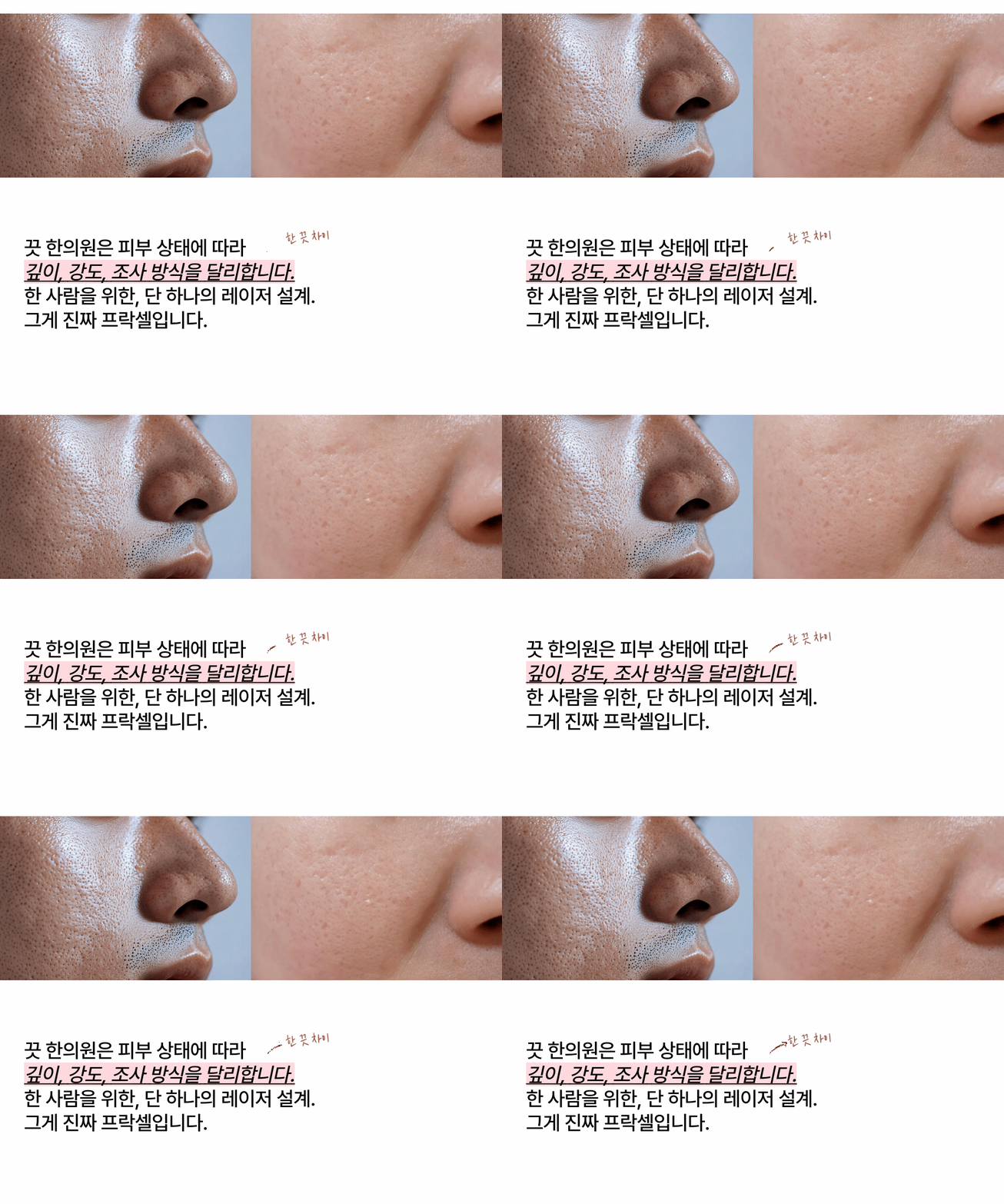




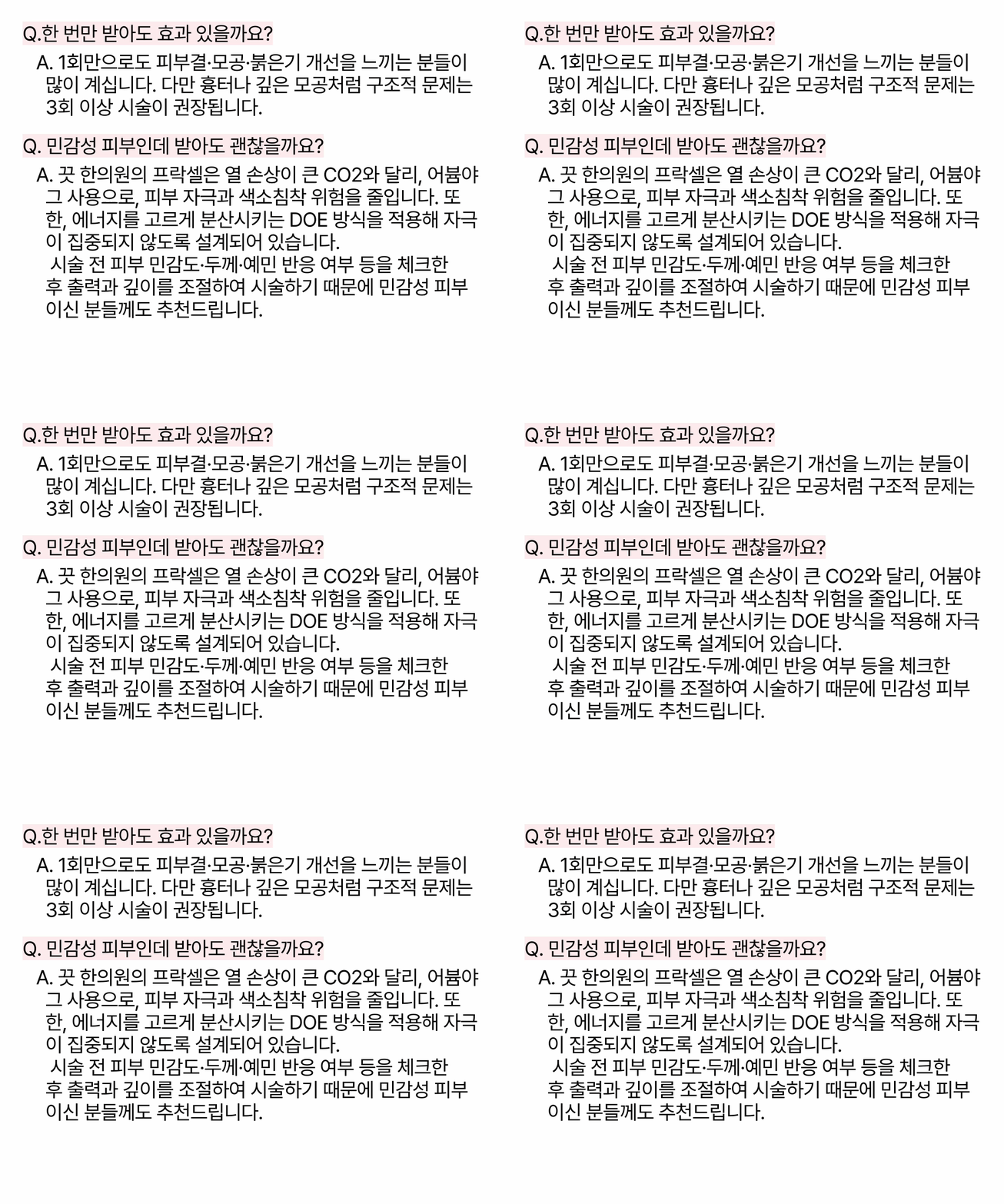
Features of Kkeut Korean Medicine Clinic's Er:YAG Fraxel
Utilizes Er:YAG laser instead of CO2 laser:
While CO2 lasers penetrate deep into the skin, they carry a higher risk of significant heat damage and hyperpigmentation.
In contrast, Er:YAG is a Fraxel device designed to precisely target the epidermal and dermal junction while minimizing heat damage.
Customized parameter adjustment to individual skin conditions:
Instead of uniform settings, we delicately adjust the depth and intensity of the treatment, considering each individual's skin condition.
By precisely tailoring the treatment, such as applying low power multiple times to thin skin areas and single high power to thicker areas, the treatment burden can be reduced.
Treatment utilizing overlap technique:
The laser is applied repeatedly to areas requiring improvement, such as fine lines, scars, and pores, to further fine-tune the treatment intensity.
It can also be applied to areas with fine lines due to aging, such as the back of the hands or neck. For body areas that are generally difficult to treat, individual treatment settings may be determined by considering various factors such as skin regeneration rate and sebaceous gland density.
Fraxel synergy effect through skin booster delivery technique:
Immediately after Fraxel treatment, microscopic channels are created in the skin.
Utilizing a protocol that applies skin boosters during this period can help deliver necessary ingredients to the dermal layer.
Considering deep scar areas or differences in skin thickness, the number of overlaps or intensity can be customized to secure absorption pathways down to the dermal junction.
When combined with skin booster treatments containing small particles, such as PDRN or Juvelook, the ingredients can be absorbed through these pathways to the dermal layer, which is crucial for regeneration. This can lead to positive effects on improving pores, fine lines, and acne scars.
Principle of Fraxel Laser
Fraxel is a term derived from 'fractional,' meaning a method of irradiating laser energy partially with microscopic spacing, not over the entire skin.
When the laser creates microscopic holes in the skin and stimulates it, the skin begins a self-healing regenerative response.
This method of inducing partial damage offers the advantage of expecting overall skin improvement effects while reducing the burden of recovery time.
Types of Ablative and Non-Ablative Fraxel
Ablative Fraxel is a method that microscopically removes the epidermis and delivers energy to the dermal junction. It aims to improve skin texture, wrinkles, and pigmentation, and while it can bring relatively clear changes, a recovery period may be needed.
Non-ablative Fraxel is a method that preserves the epidermal layer while applying thermal stimulation to the dermal layer. Recovery is relatively fast, but the expected effects may be somewhat limited.
We use ablative Er:YAG Fraxel.
Treatment Principle of Er:YAG Fraxel
Er:YAG Fraxel is an ablative laser that uses a 2940nm wavelength, which selectively reacts with water in the skin.
Thanks to these wavelength characteristics, it can precisely remove tissue from the epidermis to the dermal junction, which can lead to advantages such as precise depth control, reduced heat damage, and relatively fast recovery.
Since it removes tissue through water without causing unnecessary thermal damage to surrounding tissues, it can help reduce the possibility of hyperpigmentation and decrease the treatment burden.
Comparison of DOE and MLA Method Characteristics
Fraxel is broadly categorized into DOE (Diffractive Optical Element) and MLA (Microlens Array) methods based on how energy is delivered. The DOE method distributes laser energy uniformly to all irradiation points, which is advantageous for energy dispersion. However, the output may be limited, so the skill of the treating medical professional can be important for scar treatment.
In contrast, the MLA (Microlens Array) method shows stronger energy concentration at the center and weaker energy towards the periphery. It may be suitable for improving deep scars, but as energy is concentrated in one area, the recovery period may be longer.
Expected Effects of Er:YAG Fraxel
The Er:YAG Fraxel we use employs the DOE method,
delivering energy uniformly across the entire skin, and is performed with consideration for treatment stability.
This uniform energy delivery can help improve pores, fine lines, and skin texture, and in cases of acne scars, improvement can also be expected by utilizing the overlap technique.
Collagen and Elastin Regeneration: The laser removes micro-damaged skin and stimulates fibroblasts in the dermal layer to induce collagen and elastin production. This can lead to healthier skin and positive effects on improving elasticity.
Pore Contraction Effect: As the fibrous tissue around the pores is newly formed and rearranged, the size of the pores can decrease, and the skin surface may appear more refined.
Acne Scar Remodeling: Old scar tissue is gradually broken down and replaced with new collagen tissue, which can help improve skin texture.
Academic Basis for Er:YAG Fraxel
Serdar ZA et al. Dermatol Ther. 2019:
Study of 333 patients with facial and neck wrinkles
Erbium-YAG Fraxel can contribute to improving skin texture, wrinkles, and pigmentation when treated 3-4 times.
Robati RM et al., J Cosmet Dermatol. Paper published in 2020:
It may be suitable for those who wish to improve their skin by reducing facial pores and fine wrinkles.
Even with just one treatment, you can expect an improvement in fine wrinkles.
For 3 or more treatments, the improved effects can last longer and may also help enhance pore elasticity.
A Message from the Director
Every day, I see various skin types and realize this: everyone's skin is unique, and even for the same person, skin condition can vary day by day.
Fraxel treatment is performed after meticulously examining the day's skin condition, delicately adjusting the laser output and depth in 0.1 increments.
With this mindset, we strive for accurate and safe treatments every day.
The precision of Fraxel treatment comes not only from the equipment but also from the skillful hands of experienced medical professionals.
We will provide meticulous care to repay the trust you place in us.
Treatment Benefits
- 01. It can help improve enlarged pores or acne scars.
- 02. It forms microscopic holes within the skin, inducing healthy skin regeneration.
- 03. It can not only improve skin tone but also positively impact skin elasticity.
Ideal Candidates
- 01. Those who prefer smooth skin texture and clear skin tone.
- 02. Those concerned about enlarged pores or deep-set scars.
- 03. Those bothered by acne marks.
- 04. Those considering improving fine wrinkles or dull skin tone.
Treatment Areas
It can be applied to various skin areas showing reduced elasticity and fine wrinkles, including the face, neck, and back of the hands.
Treatment Process
- STEP 01. 1:1 Consultation
- STEP 02. Anesthetic Cream Application
- STEP 03. Fraxel Laser Treatment
- STEP 04. Soothing Care
Post-Treatment Precautions
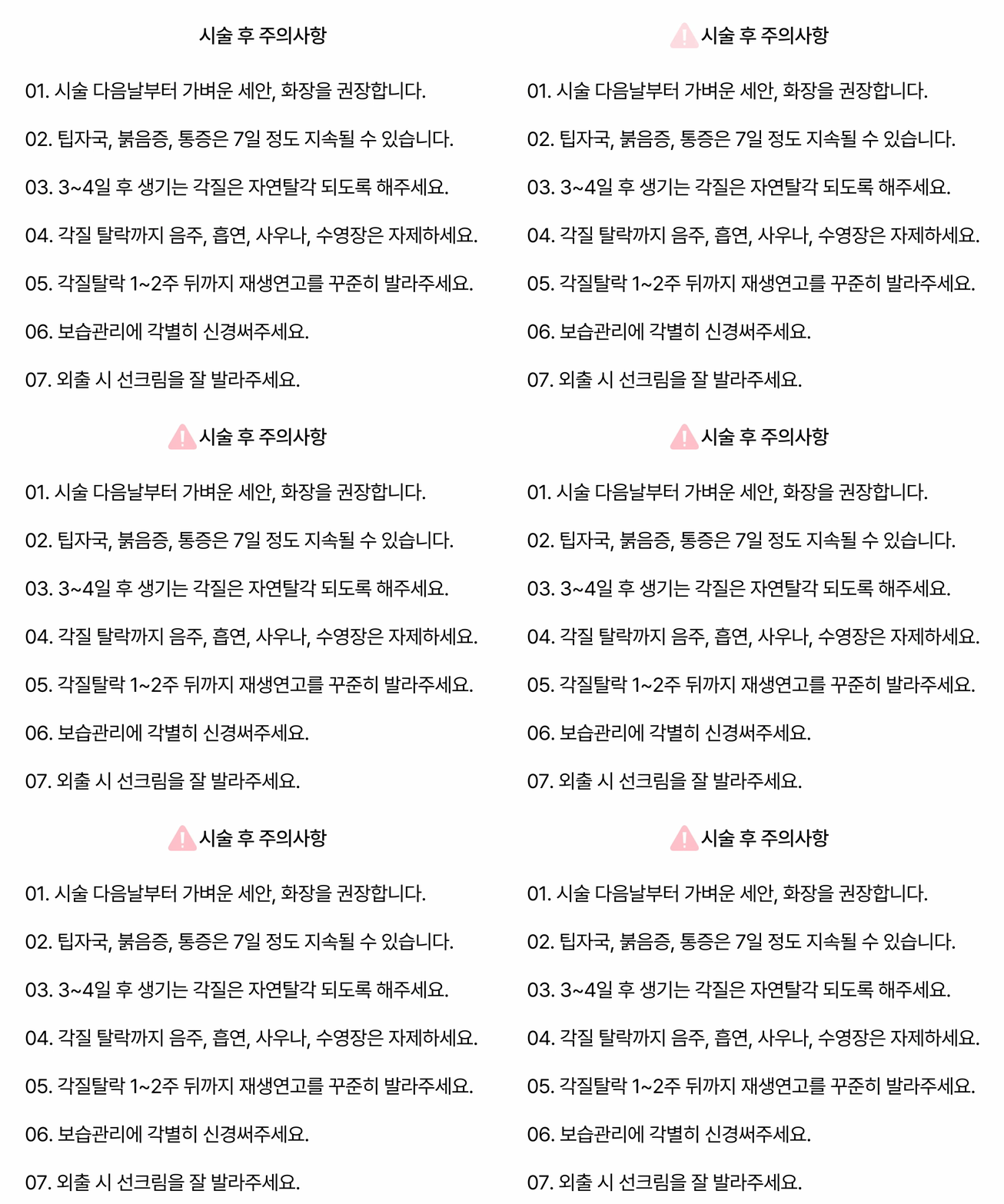
- ㆍIt is advisable not to wash your face or apply makeup on the day of the procedure, and light cleansing is recommended starting from the next day.
- ㆍTip marks, redness, and pain that may appear on the treated area can last for approximately 7 days. Cooling care using ice packs may be helpful during this time.
- ㆍFraxel is a type of laser resurfacing. Do not intentionally peel off the dead skin cells that form 3-4 days after the treatment; allow them to shed naturally.
- ㆍIt is advisable to refrain from alcohol consumption, smoking, visiting saunas, public baths, or swimming pools until all dead skin cells have naturally exfoliated.
- ㆍThe period from immediately after the treatment until 1-2 weeks after skin exfoliation is crucial for skin regeneration, so we recommend consistently applying a regenerating ointment.
- ㆍPay special attention to moisturizing care for skin soothing, and always apply a sufficient amount of sunscreen when going outdoors for UV protection.
Treatment Flow
첫 상담부터 마무리까지의 실제 진행 순서를 확인하세요.
- 01
개인의 피부 상태를 면밀히 분석한 후, 시술 계획을 세우고 이에 따라 시술을 진행하게 됩니다.
Q&A
고객님들이 가장 많이 물어보시는 내용을 모았습니다.
Will the fractional laser treatment be very painful?

Before the procedure, we apply an anesthetic cream to reduce discomfort. Generally, pain during the procedure may be felt to be relatively mild, and there may be a slight burning sensation for about 1-2 days after the procedure.
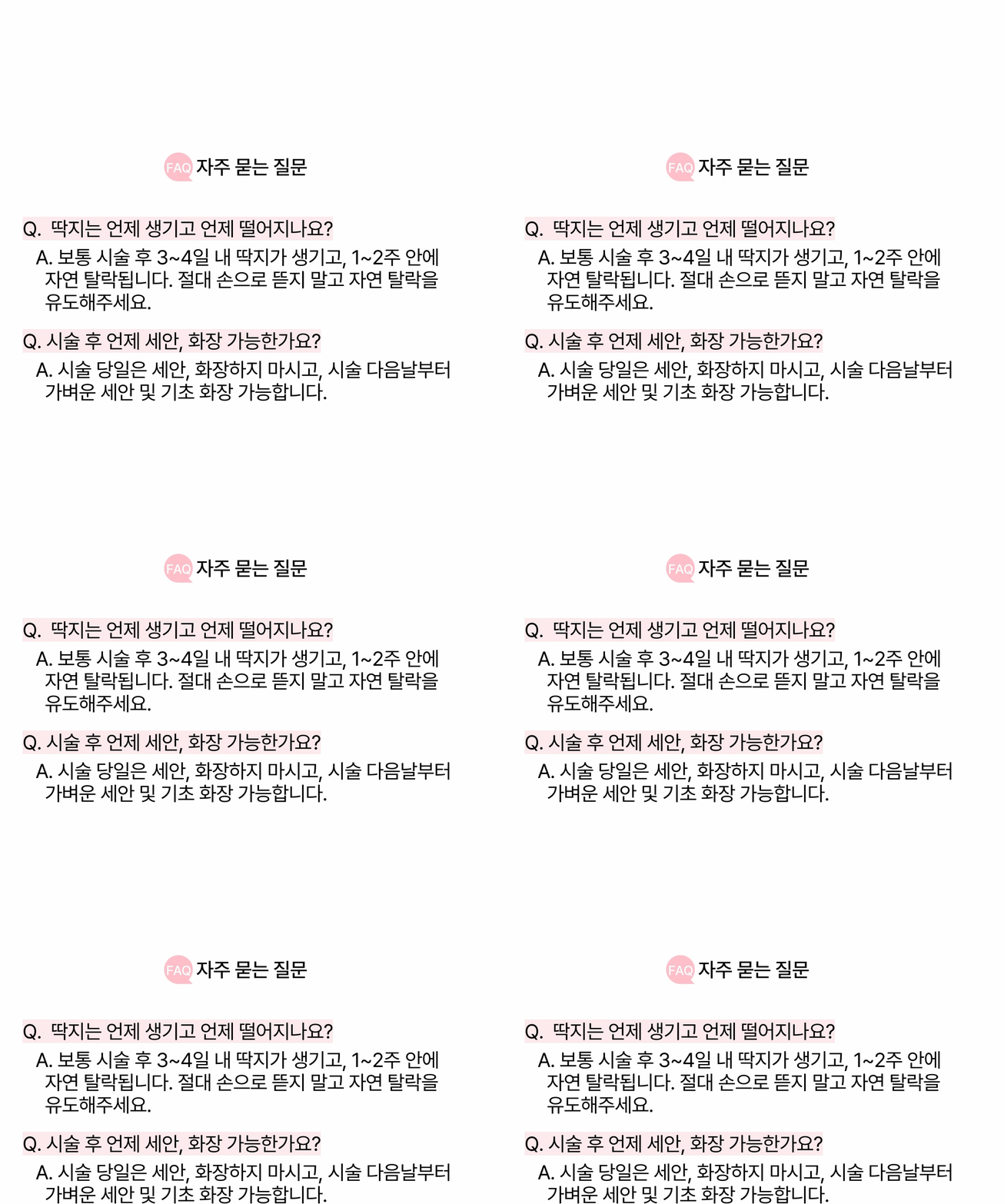
When do scabs form, and how long do they last?
Small scabs begin to form about 3-4 days after the procedure, and usually naturally fall off after about a week. Although there may be individual differences, these scabs generally fall off within 1-2 weeks. Since the procedure finely stimulates the epidermis, temporary redness may appear and usually lasts for about 1-2 weeks.
How long does the redness last?
Generally, redness after the procedure tends to subside after about 1-2 weeks. However, if the skin is sensitive or dry, or if the regenerative capacity is reduced, redness may persist longer than expected.
When can I wash my face or apply makeup after the procedure?
It is recommended not to wash your face or apply makeup on the day you receive fractional laser treatment. It is generally possible from the next day.
What is the treatment cycle?
The treatment interval is usually once every 4 weeks, with 3 to 5 sessions being common. After that, considering re-treatment every 3-6 months can help maintain the improved condition.
When can I expect to see the treatment effects?
Collagen regeneration begins to activate 2-3 weeks after the procedure, and you can expect to feel changes in skin elasticity after about 1 month. However, if the skin concerns are deep, you are more likely to experience more satisfactory changes after 3 or more sessions. Treatment effects may vary by individual.