


Brightening / Melasma / Redness / Blemishes[Laser Toning] The subtle difference in results, for clear and clean skin
![[Laser Toning] The subtle difference in results, for clear and clean skin](/_next/image?url=https%3A%2F%2Ffirebasestorage.googleapis.com%2Fv0%2Fb%2Fkkeutguro-7e583.firebasestorage.app%2Fo%2Fproducts%252Fbssm%252Fko%252F1777358151941_423c6b46-edee-46a1-84f6-3e0c0b906700_______________.webp%3Falt%3Dmedia%26token%3D2eebac74-10ee-4358-acb6-87a67bb9b65a&w=2048&q=75)
[Laser Toning] The subtle difference in results, for clear and clean skin
Premium toning combining Laseroptek's 785nm pico and 1064nm nano wavelengths. This laser toning is designed to precisely target pigmented lesions, with different wavelengths acting at varying skin depths. Before treatment, melanin distribution, erythema, and epidermal/dermal depth are captured using skin diagnostic equipment to confirm the skin condition and characteristics of the lesions. Based on this, a laser wavelength suitable for the lesion's characteristics is selected to perform treatment tailored to various pigmentation concerns such as melasma, lentigo, freckles, ABNOM, and dark circles. * VAT not included * Post-management separate
Options
Treatment Details



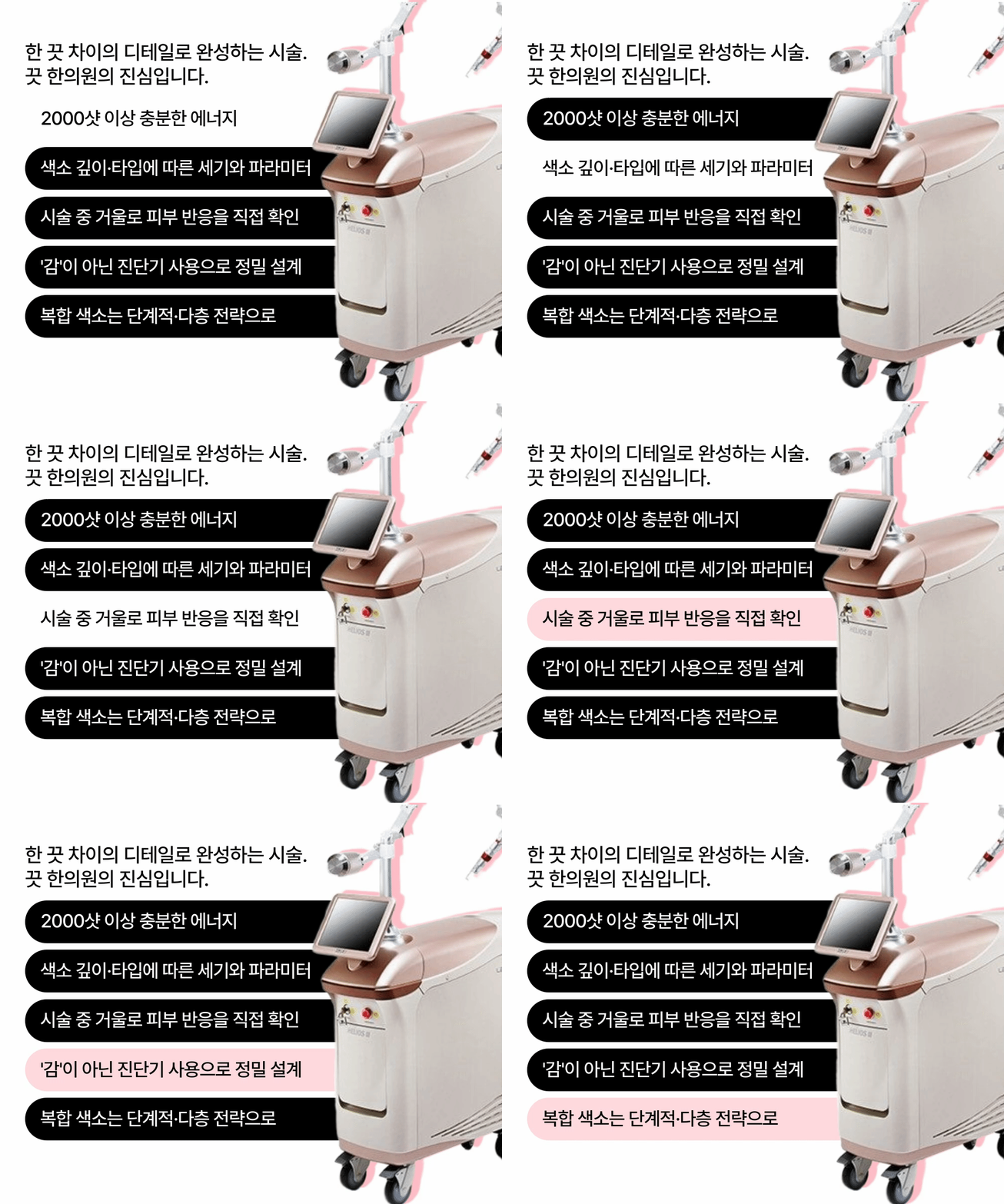


 Laser Toning Method at Our Clinic
- 1. We apply sufficient energy with over 2000 shots. Our clinic uses sufficient energy with over 2000 shots. Instead of performing procedures quickly with low output, we strive to increase treatment efficiency and reduce skin irritation through precise targeting.
- 2. Customized intensity adjustment by medical staff according to pigment depth and type. Various pigment lesions such as melasma, ABNOM (Acquired Bilateral Nevus of Ota-like Macules), and blemishes have different depths and characteristics. Accordingly, our medical staff directly adjusts the laser intensity to match the depth and type of the pigment. For example, for melasma, a delicate approach is used, while for ABNOM, more concentrated energy is applied. Even in complex cases, appropriate intensity and parameters are used for each area.
- 3. Mirror confirmation and real-time parameter adjustment during treatment. Laser treatment is not just about firing the laser. During the procedure, the medical staff carefully observes the skin's reaction with the patient using a mirror. The spot size, laser intensity, and handpiece are adjusted in real-time as needed, ensuring the treatment is tailored to each individual.
- 4. Detailed diagnosis of pigment location and depth using Mark-Vu diagnostic device. We do not rely solely on visual diagnosis. We use the Mark-Vu diagnostic device to objectively identify the type, distribution range, and depth of pigments. Based on these diagnostic results, we establish a personalized treatment plan for each individual.
- 5. Step-by-step approach for complex pigmentation. When multiple types of pigmentation appear together, focusing on only one method may worsen the condition. For example, when melasma and ABNOM are present simultaneously, we consider a step-by-step approach: first, stably managing the melasma, then applying a more intensive method to ABNOM located in the dermal layer.
Our Clinic's Approach to Laser Toning
Laser toning is a commonly used method to improve pigmentation issues. However, the treatment results can vary among individuals depending on the equipment used, the number of shots, and the intensity applied.
Various pigment disorders such as melasma, blemishes, and ABNOM (Acquired Bilateral Nevus of Ota-like Macules) have different locations within the skin and different response patterns. Therefore, it is important to create a treatment plan that considers individual characteristics.
1. We apply sufficient energy with over 2,000 shots
According to numerous research findings, low-output laser toning treatments are relatively stable and can be expected to show efficacy within the 1500-2500 shot range.
At our clinic, we typically perform laser irradiation with over 2,000 shots as a standard. We approach this carefully to help improve pigmentation without causing unnecessary skin irritation.
Skin improvement cannot be expected merely by operating the equipment.
A precise adjustment process is required for laser shot count, output intensity, irradiation speed, and spot size, depending on each individual's pigment depth, distribution range, and skin sensitivity.
2. Individual toning adjustment by medical staff tailored to disease characteristics
1) Melasma
Melasma is one of the pigment disorders that primarily appears on both sides of the face.
Since it is a condition where melanin-producing melanocytes are overly active, improper stimulation can inadvertently make melasma darker.
At our clinic, we use the Mark-Vu skin diagnostic device to meticulously confirm the extent and depth of melasma. We then perform the treatment using a toning laser with a short pulse width of 5 nanoseconds.
Our approach involves selectively destroying melanosomes within the melanocytes without stimulating the melanocytes themselves. This can help reduce the possibility of side effects that may occur during melasma treatment.
Even during the procedure, the medical staff observes the skin's reaction with the patient in the mirror and adjusts the laser intensity or areas that require focused treatment. Handpiece changes and parameter settings are carefully modified to ensure that no area is missed and appropriate treatment is delivered.
We check the patient's skin condition with them in the mirror before, during, and after the procedure.
2) ABNOM (Acquired Bilateral Nevus of Ota-like Macules)
ABNOM, like melasma, is a pigmented lesion that appears in the dermal layer of the skin. However, compared to melasma, it may require slightly stronger energy.
In complex cases where melasma and ABNOM appear together, conflicting approaches may be simultaneously necessary: reducing stimulation for melasma while applying more concentrated energy to ABNOM. Delicate adjustment, considering the characteristics of each lesion, is crucial.
If strong treatment is performed without first considering melasma, there is a possibility that melasma symptoms may worsen.
At our clinic, we differentiate each pigment lesion through accurate diagnosis before treatment and create an individualized treatment plan. This helps reduce the possibility of unnecessary side effects and allows us to adjust the laser intensity to aid in the improvement of ABNOM as well as other pigmentation issues.
Before ABNOM treatment, a precise differentiation is made through Mark-Vu diagnosis. Our medical staff meticulously adjusts and applies various parameters such as spot size, repetition rate, and output, tailored to the patient's skin type.
3) Other Pigmentary Disorders
Common pigmentation like lentigines, freckles, and blemishes can potentially improve relatively quickly with the application of appropriate wavelengths. However, when accompanied by other pigmentary lesions like melasma or ABNOM, the treatment can become more complex.
Even in such cases, accurate differential diagnosis must precede, and skin reactions should be checked with a mirror after each session, flexibly adjusting laser output, handpiece changes, and more. At our clinic, we aim for personalized treatment that goes beyond simple laser toning, considering individual pigment characteristics.
Understanding Pico Toning and Laser Toning
Pico toning uses short laser pulses in picosecond (ps) units to break down pigment particles even more finely.
On the other hand, conventional laser toning uses a method that delivers energy for a slightly longer duration in nanosecond (ns) units.
Both toning methods selectively target melanin pigment, leading to expected skin tone improvement. They are applied in the management of various pigmentary disorders such as melasma, blemishes, and ABNOM (Acquired Bilateral Nevus of Ota-like Macules).
Due to the difference in laser irradiation time, pico toning may show a faster response in the initial 2-3 sessions. However, studies suggest that after 10 or more consistent sessions, both methods can show similar outcomes in terms of pigment improvement.
Conventional laser toning is a method that has been used clinically for a long time. Especially for skin sensitive to irritation or pigmentary disorders like melasma, it can be a relatively stable treatment option.
Due to the characteristic of strong energy being delivered instantaneously during pico toning, temporary redness or stinging may occasionally be felt.
According to various research results comparing treatments using the 1064nm wavelength, no significant difference was observed between the two treatment methods in terms of skin brightness, melasma improvement, or melanin index reduction.
So, what factors are important to expect results similar to pico toning with laser toning treatment?
The number of repetitive sessions is important. Generally, 10 or more consistent sessions are recommended.
It is necessary to adjust the appropriate energy intensity within the range of 1.0~2.0 J/cm² according to the individual's skin reaction.
A sufficient number of shots must be ensured during the treatment. It is common to irradiate at least 2000 shots.
It is recommended to maintain a treatment interval of 1-2 weeks. If the interval is longer, the cumulative effect of the treatment may decrease.
It is important to consult with and proceed under the guidance of a specialized medical professional who can finely adjust the treatment according to skin type and real-time reactions.
If treatments are performed meeting these conditions, comprehensive research results suggest that there may be no clinically significant difference compared to pico toning.
All content mentioned above references relevant research papers.
References include Medicina (Kaunas), 2022, Lasers in Medical Science, 2021, Journal of Cosmetic and Laser Therapy, 2021, among others.
What is Laser Toning?
Laser toning is a procedure that repeatedly irradiates low-power laser energy deep into the skin to gradually improve pigmentation and even out skin tone.
Unlike conventional methods that directly burn off pigment with strong energy, it utilizes the principle of repeatedly applying subtle stimulation to gently break down melanin pigment and aid the skin's natural recovery process.
It can be considered for various types of pigmentary lesions such as melasma, blemishes, and ABNOM (Acquired Bilateral Nevus of Ota-like Macules) without causing excessive irritation to the skin. It is currently one of the most sought-after pigmentation improvement treatments.
1. Type of laser used: Q-switched Nd:YAG
Q-switched Nd:YAG lasers are primarily used in laser toning treatments.
This laser uses a 1064nm wavelength, allowing it to reach the upper dermis where melanin pigment is primarily located. Its strength lies in selectively targeting and breaking down pigment while minimizing damage to the skin's surface.
It helps improve pigmentary lesions while protecting the skin barrier, allowing for relatively comfortable treatment even for sensitive or thin skin.
2. Low power, high repetition 'tone-up' stimulation
While typical pigment treatment involves removing pigment in one go with a high-power laser, laser toning irradiates low-energy laser thousands of times repeatedly.
This approach minimizes damage to skin tissue while finely fragmenting melanin particles. The broken-down pigment is absorbed by the body's immune system, specifically macrophages, helping it disappear naturally.
Through this, an overall improvement in skin tone, becoming more even and clearer, can be expected.
3. Dendrite sheath destruction + Melanin removal within melanocytes
Laser toning goes beyond simply breaking down pigment; it also plays a role in regulating the melanin production process itself.
The core of this action lies in destroying the dendrites, or branches, of melanocytes.
Dendrites are important pathways that transport mature melanosomes (vesicles containing melanin), produced by melanocytes, to the epidermis, the outermost layer of the skin.
When the laser damages these dendrites, the movement of melanosomes to the epidermis is hindered. Consequently, this can help reduce the formation of new pigmentation on the skin surface.
Furthermore, it can directly break down melanin pigment already accumulated within melanocytes, which can help improve existing pigmentation.
This melanin production inhibitory effect is primarily observed with lasers that have short irradiation times, in nanosecond or picosecond units.
This can be considered one of the important mechanisms of action for treatments such as laser toning or pico toning.
Key 3 Points of Laser Toning
Three Main Principles of Laser Toning Treatment
Laser toning is a treatment that goes beyond simply removing pigments, focusing on managing the entire process from melanin production to its transport.
1. Removal of Existing Pigment Particles
For pigmentary disorders other than melasma, such as blemishes or ABNOM (Acquired Bilateral Nevus of Ota-like Macules), a relatively strong energy setting can be used to break down melanin, expecting improvement.
However, melasma is sensitive to stimulation, so very delicate energy control is essential. Care must be taken to prevent excessive stimulation from activating melanocytes and worsening the symptoms.
2. Inhibition of Melanosome Transport through Dendrite Destruction
By obstructing the movement of melanosomes, produced in pigment cells, to the epidermal layer, it helps prevent the occurrence of new pigmentation.
3. Direct Destruction of Melanin within Melanocytes
Laser energy acts on melanin pigment within melanocytes, finely breaking it down. This leads to a reduction in melanin concentration, and you can expect a brighter skin tone.
Expected Benefits of Laser Toning
- 1. Improved Skin Tone When the laser finely breaks down melanin pigment, dull skin can become noticeably clearer overall.
- 2. Alleviation of Melasma and Pigmentation Concerns By selectively destroying melanosomes without directly stimulating melanocytes, it can help manage sensitive melasma.
- 3. Management of ABNOM (Acquired Bilateral Nevus of Ota-like Macules) Energy is finely adjusted to reach pigments in deeper dermal layers than melasma. This allows for an attempt to improve dermal pigmentation.
- 4. Regulation of Pigment Production Activity By managing dendrites, the transport pathways for melanin, it controls melanin from rising to the skin surface. This can contribute to reducing unnecessary pigment production.
- 5. Improvement in Fine Lines and Skin Texture As laser energy aids in the skin's regeneration process, you can also expect secondary effects such as an overall refinement of skin texture and a lightening of fine lines.
- 6. Approach for Sensitive Skin The treatment is performed by irradiating with low energy multiple times. This reduces irritation to the skin, making it one of the methods that can be tried by those with sensitive skin types.
When Laser Toning is Recommended
- 1. Those concerned about dull or uneven skin tone
- 2. Those experiencing recurring or darkening pigmentary lesions such as melasma, blemishes, or freckles
- 3. Those with deep pigment concerns in the dermal layer, such as ABNOM (Acquired Bilateral Nevus of Ota-like Macules)
- 4. Those with thin or sensitive skin who are cautious about pigment management
- 5. Those seeking to address pigment concerns along with improving fine lines and skin texture
- 6. Those who desire continuous improvement while minimizing stress on their skin
Laser Toning Treatment Procedure
- STEP 1. Precise skin diagnosis using Mark-Vu. Accurately identifies the location, depth, and distribution of pigments that are difficult to discern with the naked eye.
- STEP 2. 1:1 customized consultation with the director and establishment of a treatment plan.
- STEP 3. Laser toning treatment proceeds after setting personalized optimal parameters (final confirmation with the director in front of a mirror before treatment).
- STEP 4. Check progress in the mirror during the treatment and re-examine areas that require focused attention.
- STEP 5. Confirm changes in the mirror after the treatment, and receive detailed guidance on the future course of progress.
Our Medical Team's Philosophy
Pigmentary disorders such as melasma or ABNOM can cause significant psychological distress to many individuals over a long period.
It's not uncommon for patients to worry, 'Can it be improved?' or 'What if it gets worse?'
Therefore, in pigment treatment, we always pay close attention to ensure it's not merely a procedure using only equipment.
Our important principle is to meticulously examine the condition of each skin visually and apply appropriate energy only to the necessary areas.
The approach to pigmentary lesions must vary depending on an individual's skin depth and sensitivity.
Laser toning requires meticulous diagnosis and planning. We will do our best to ensure it is performed in a way that is suitable for each individual.
Post-Treatment Precautions
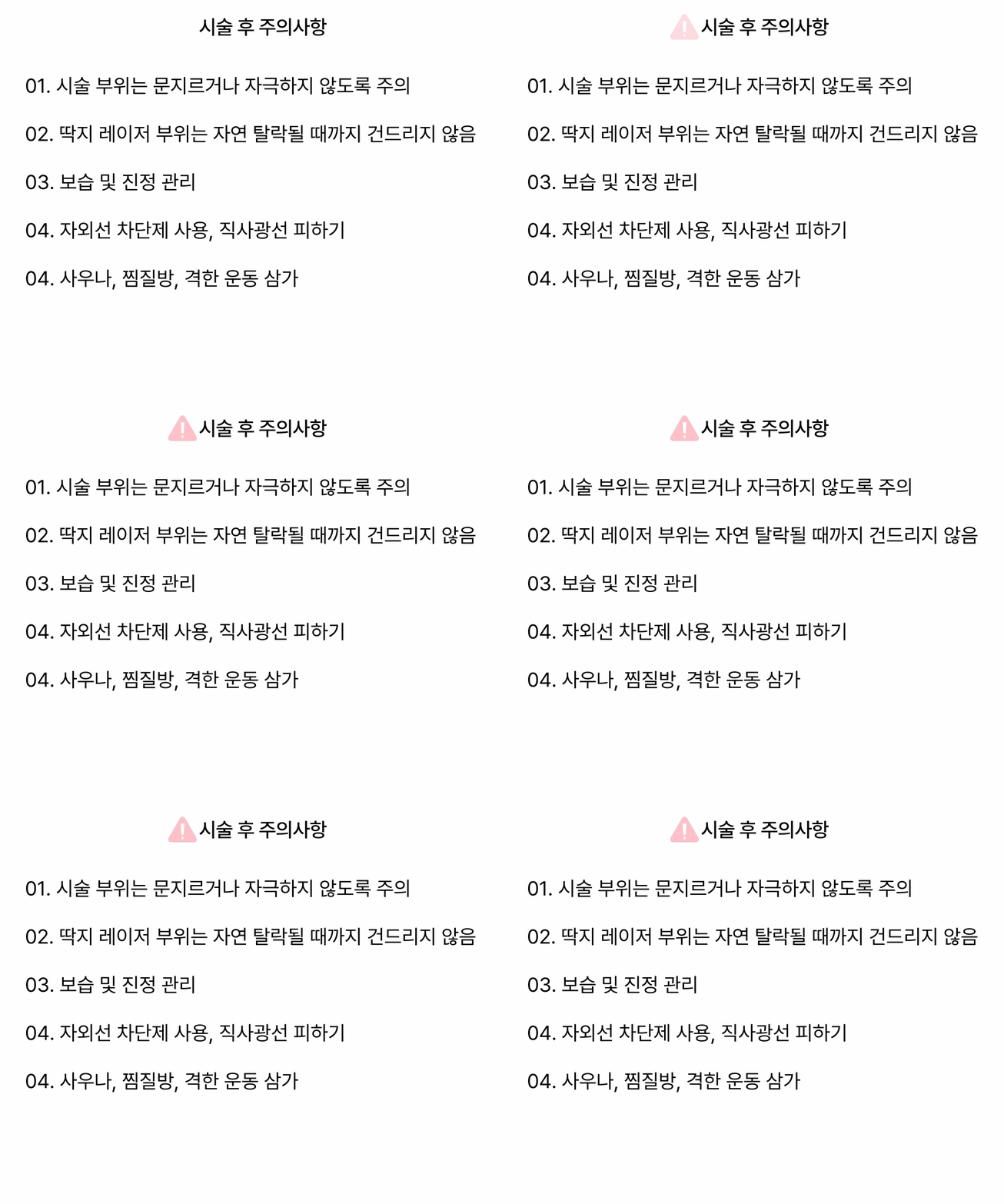
- ㆍYou can wash your face and apply makeup from the day of the procedure. We recommend paying extra attention to sun protection.
- ㆍAfter the procedure, it is advisable to provide sufficient soothing and moisturizing care for temporarily irritated skin.
- ㆍSlight swelling or redness may appear in the treated area, but most will subside naturally over time. If symptoms persist for more than a few days, please contact the clinic.
시술 진행 단계
첫 상담부터 마무리까지의 실제 진행 순서를 확인하세요.
- 01
직접 세안을 통해 피부를 준비합니다.
- 02
마크뷰(Mark-Vu) 장비를 사용하여 피부를 정밀하게 진단합니다.
- 03
담당 의료진과 1:1 개인별 맞춤 상담을 진행합니다.
- 04
피부 상태에 맞춘 파라미터로 레이저 토닝 시술을 시행합니다.
- 05
시술 부위에 재생 크림을 도포하여 마무리합니다.
시술 기본정보
시술 시간, 마취, 회복, 유지기간을 한 번에 확인하세요.
TIME
20~30분 이내
ANESTHESIA
마취 없음
RECOVERY
일상생활 바로가능
Q&A
고객님들이 가장 많이 물어보시는 내용을 모았습니다.
What is the recommended number of sessions and frequency for toning treatment?

The general recommended number of sessions is 10 or more, and the appropriate treatment interval is 1 to 2 weeks. This can be adjusted according to the individual's skin condition.
Can acne appear after laser toning treatment?
Yes, occasionally, temporary acne reactions may appear in individuals with active sebum secretion after toning. Generally, they often subside naturally over time, so you don't need to worry too much. It's best to avoid unnecessary irritation to the skin and ensure sufficient moisturizing care. If symptoms persist for more than a week or cause discomfort, we recommend visiting the clinic to check your condition.
Does pico toning show significantly better results than nano toning?
Pico toning is characterized by a shorter irradiation time, but in actual clinical practice, the final improvement effect often does not show a significant difference between the two methods.