
[Real Wrinkle Care] No-Tox[Fundamental Wrinkle Improvement Notox!] Notox Jaw · Forehead · Glabella · Nasolabial Fold Wrinkle Management Instead of Botox
![[Fundamental Wrinkle Improvement Notox!] Notox Jaw · Forehead · Glabella · Nasolabial Fold Wrinkle Management Instead of Botox](/_next/image?url=https%3A%2F%2Ffirebasestorage.googleapis.com%2Fv0%2Fb%2Fkkeutguro-7e583.firebasestorage.app%2Fo%2Fproducts%252Fguro%252Fen%252F1758617569866_84662fb2-5c18-409f-8f9b-7abbb623c97a_001-copy-1-ezgif.com-png-to-webp-converter.webp%3Falt%3Dmedia%26token%3D3c3dfe99-ffe9-4761-979f-9b929d23b0fe&w=2048&q=75)
[Fundamental Wrinkle Improvement Notox!] Notox Jaw · Forehead · Glabella · Nasolabial Fold Wrinkle Management Instead of Botox
Wrinkle care starting with a single treatment Forehead · Glabella · Eye Area · Under Eyes · Nasolabial Fold · Marionette Notox *VAT separate
Options
Treatment Details
.png%3Falt%3Dmedia%26token%3D7b094bbb-bbe7-4b97-8657-7bf7f9480e43&w=1920&q=75)


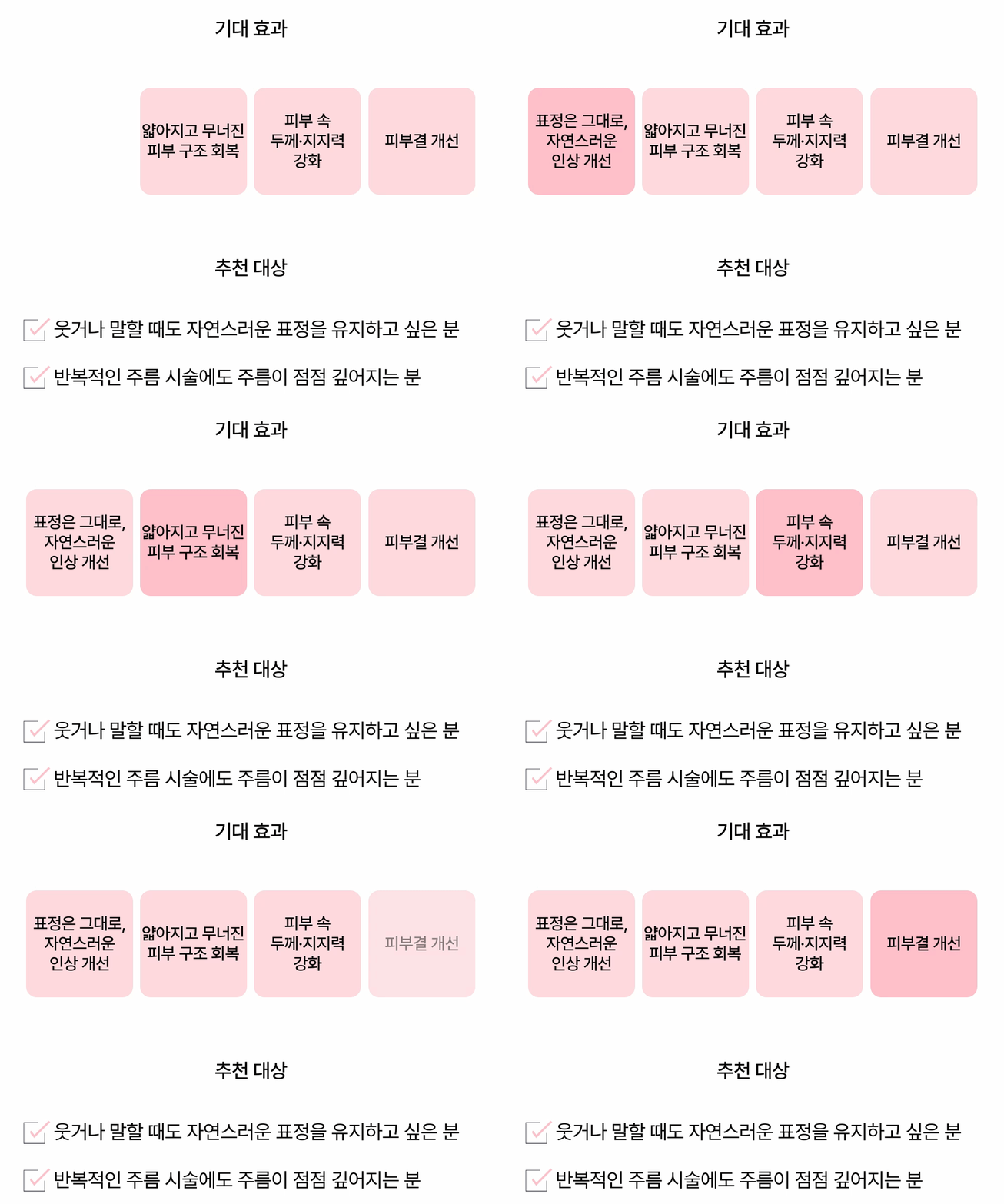
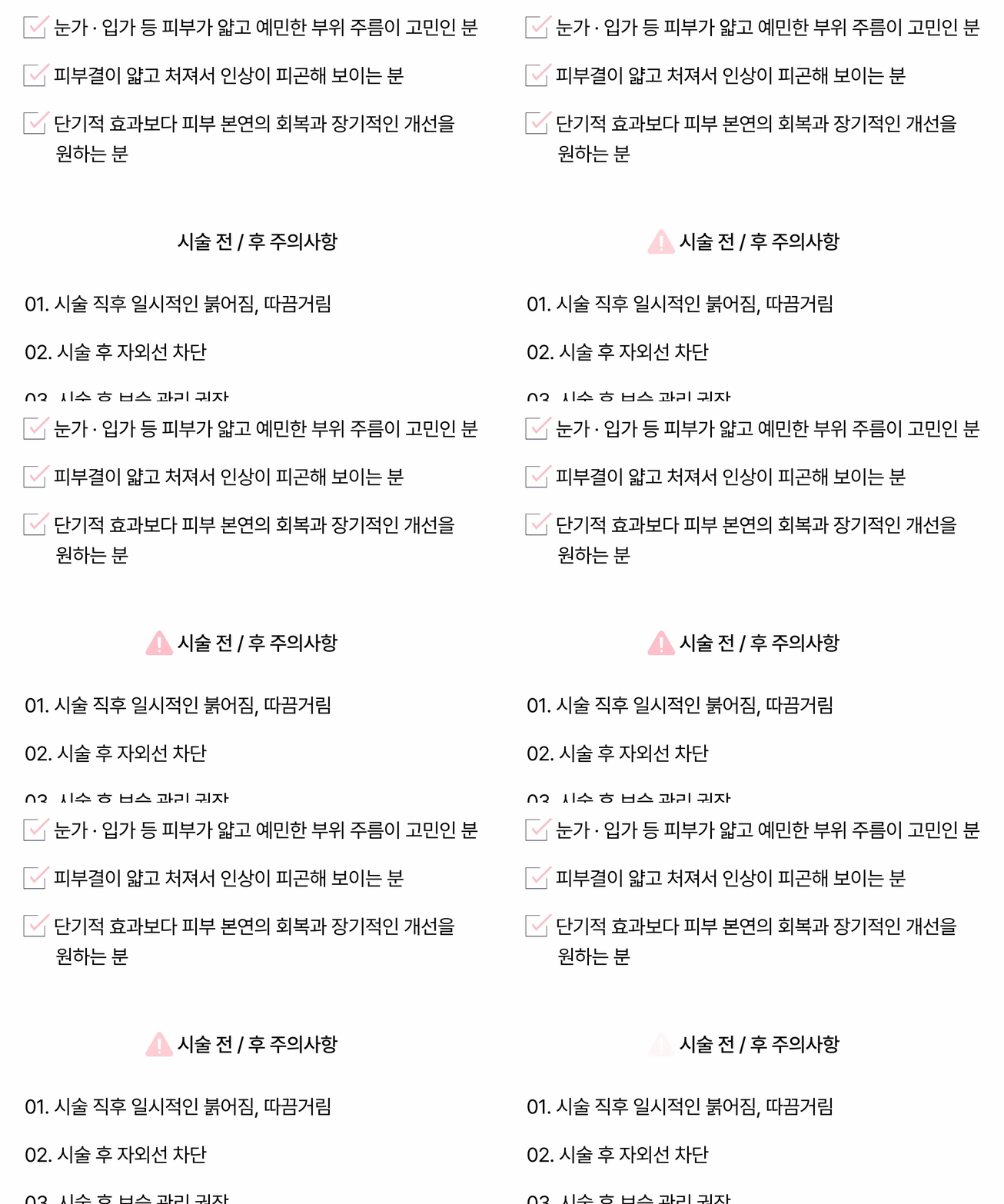
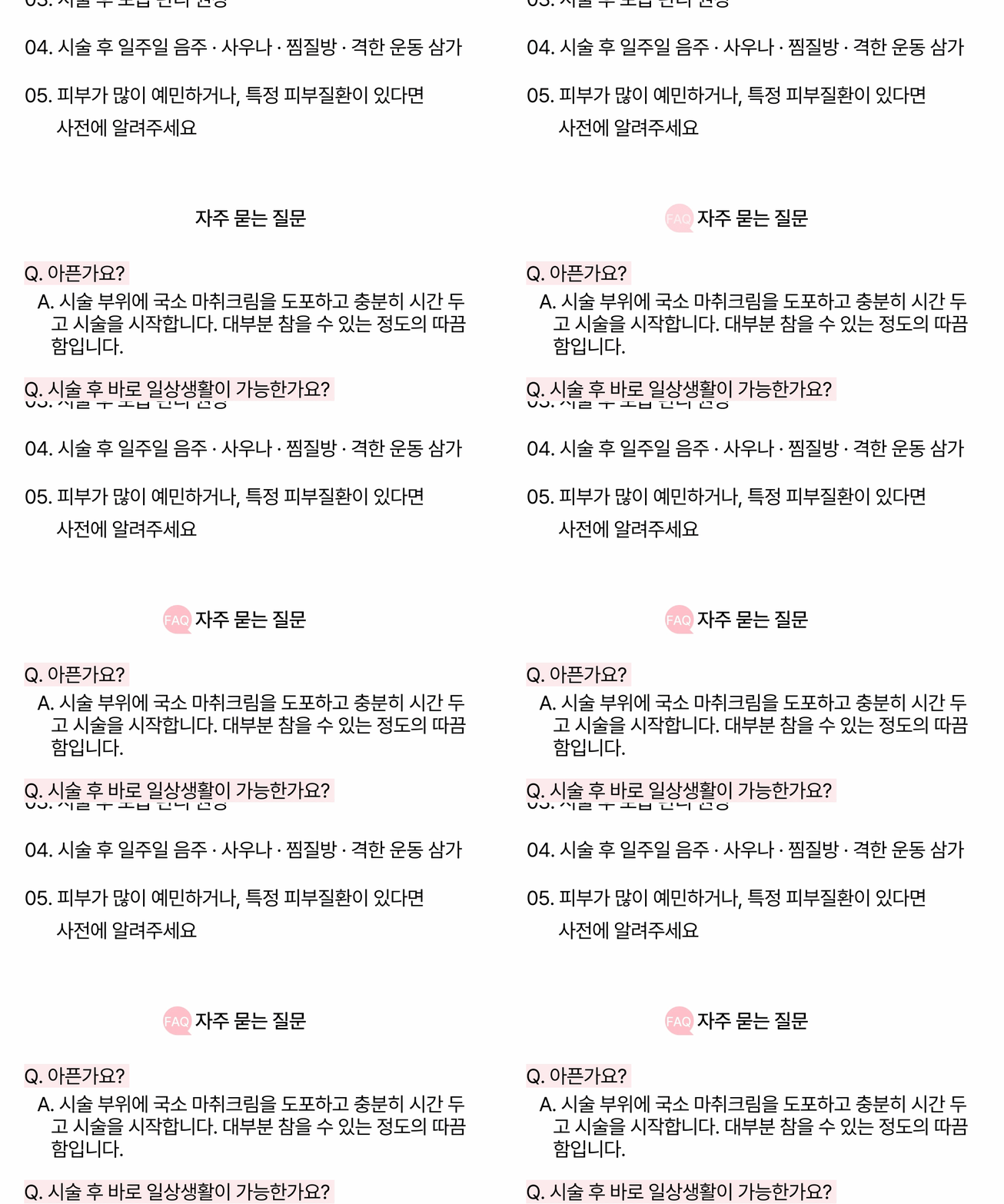

Kkeuthan Clinic's NOTOX
Many people considering wrinkle improvement often think of Botox first.
Botox is a treatment that targets wrinkles caused by facial expressions, such as those on the forehead, glabella, and around the eyes,
and can help temporarily reduce them.
However, it works by temporarily paralyzing muscles,
thereby reducing the appearance of wrinkles.
It does not directly improve the skin's own aging process.
Kkeuthan Clinic's 'NOTOX' goes beyond merely reducing superficial wrinkles,
focusing instead on fundamentally restoring the skin's inherent structure.
While Botox aims to temporarily suppress muscle movement,
NOTOX adopts an approach that improves the skin's own environment to reduce the likelihood of wrinkle formation.
───────────────
3 Key Elements for Wrinkle Improvement
1. Dermal Layer Regeneration
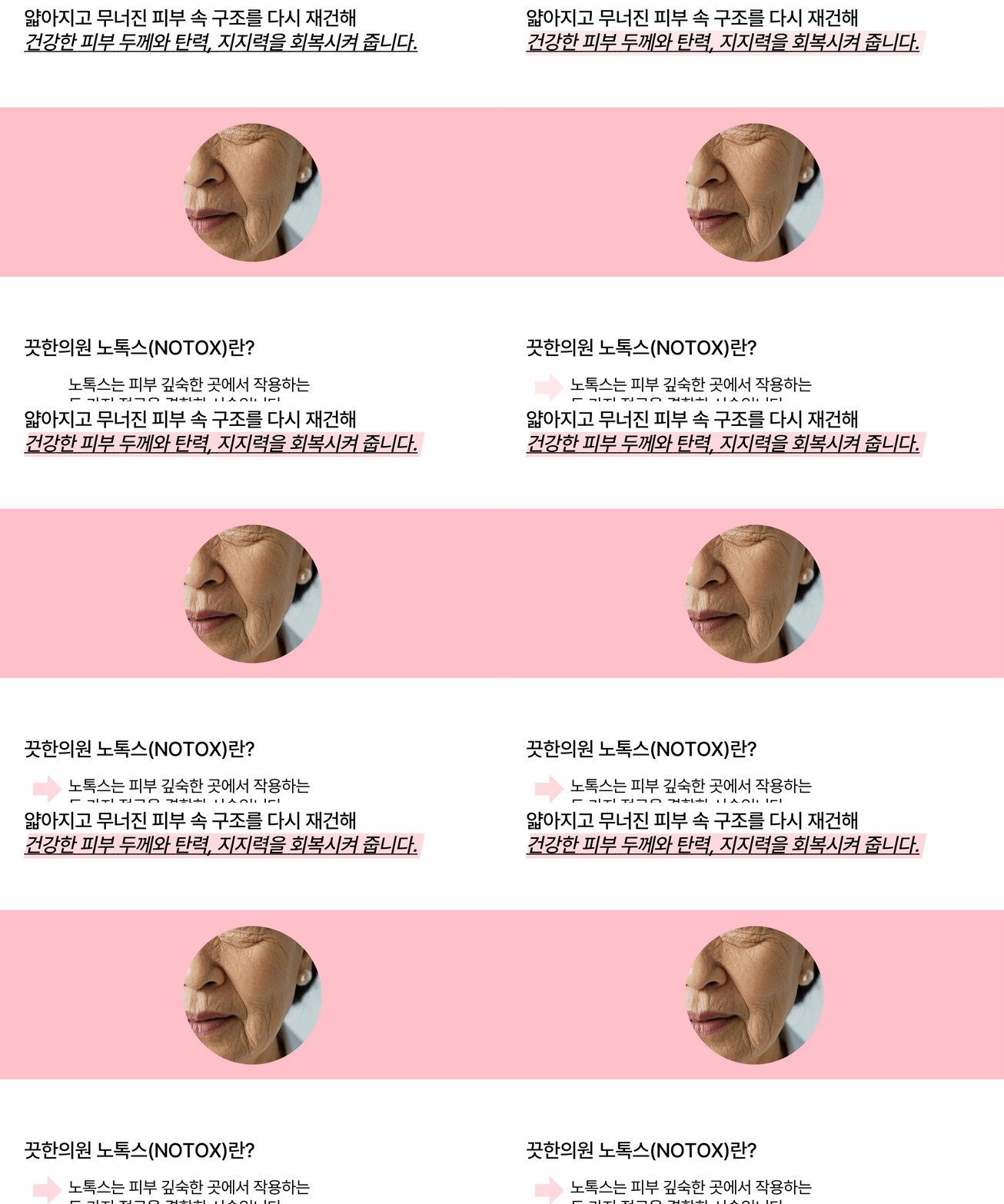
- Areas with wrinkles often have thinner and weaker skin.
Restoring the skin to a healthy state can lead to positive effects on wrinkle improvement.
2. Collagen/Elastic Fiber Rearrangement
- Reorganizing the dermal structure, which has become disordered due to aging, can help the skin regain elasticity and support.
3. Enhanced Support
- Internal support is crucial for areas that crease due to repetitive movements.
We believe a process is needed to restore the skin's inherent elasticity.
* Botox does not directly affect these three key elements.
Instead, by temporarily restricting the movement of facial muscles,
it is an external inhibitory method that helps reduce wrinkle formation.
Therefore, while temporary effects can be expected, long-term maintenance may be difficult.
───────────────
Recommended NOTOX Treatment Areas
1. Forehead Wrinkles
This area is prone to deepening wrinkles due to repetitive facial expressions.
Repeated use of Botox can potentially lead to lowered eyebrows or an unnatural, stiff appearance.
Kkeuthan Clinic's NOTOX treatment can help restore skin health, naturally reducing the creasing of forehead wrinkles.
2. Glabellar Lines (Frown Lines)
This area is highly susceptible to developing deep, fixed wrinkles.
Even after Botox treatment, fine lines may remain, or a somewhat unnatural expression might appear.
NOTOX treatment induces dermal layer regeneration and can contribute to improving the internal structure of the wrinkle lines.
3. Fine Lines Around and Under the Eyes
This is an area with thin and sensitive skin.
Excessive use of Botox can make the outer corners of the eyes look somewhat awkward when smiling.
It induces skin activation with ingredients that aid in dermal regeneration,
and helps in natural wrinkle improvement with ingredients that gently support the skin.
4. Nasolabial Folds
Nasolabial folds are not solely caused by facial muscle movements; they can also result from a complex interplay of sagging cheeks and decreased skin elasticity.
For these types of wrinkles, effective improvement may be difficult to achieve with Botox alone.
NOTOX treatment can help improve nasolabial folds by restoring healthy skin thickness and rebuilding the supporting structure that provides volume to sunken areas.
5. Lip Wrinkles
The area around the mouth moves frequently and the skin is relatively thin, making it prone to wrinkle formation.
If Botox is used around the mouth, there's a risk of your expressions appearing somewhat unnatural when speaking or smiling.
NOTOX treatment aids in skin regeneration and strengthens supporting structures, which can help reduce lip wrinkles while maintaining natural facial expressions.
6. Sunken Area Below the Corner of the Mouth (Marionette Lines)
As we age, fat loss and thinning skin in this area can make it appear deeply hollowed.
Marionette lines are static wrinkles caused by structural changes rather than facial muscle movements, so significant improvement with Botox may be difficult to achieve.
Improvement can be expected by utilizing regenerative ingredients and refining the overall contour to strengthen the skin's supporting power.
───────────────
Recommended For
- 1. Those who are concerned about unnatural expressions from repeated Botox treatments
- 2. Those who feel their wrinkles are not fully improved and persist after Botox treatment
- 3. Those concerned about thin skin or experiencing wrinkles that are gradually deepening
- 4. Those who desire to restore their skin's inherent health and achieve long-term wrinkle improvement rather than short-term changes
Procedure Steps
첫 상담부터 마무리까지의 실제 진행 순서를 확인하세요.
- 01
Individual facial cleansing
- 02
Skin condition analysis using Mark-Vu
- 03
One-on-one individual consultation
- 04
Medical team design and procedure execution
- 05
Post-procedure skin soothing and finishing care
시술 기본정보
시술 시간, 마취, 회복, 유지기간을 한 번에 확인하세요.
TIME
Within 30 minutes
ANESTHESIA
Topical anesthesia
RECOVERY
Immediate return to daily life
DURATION
6-12 months
Ideal For
One Fine Difference makes real results.
- KKEUT POINT 01
This may be suitable for those who are concerned about their facial expressions becoming unnatural due to repeated injection procedures.
- KKEUT POINT 02
Recommended for those who are concerned about their skin thinning and wrinkles gradually deepening.
Q&A
고객님들이 가장 많이 물어보시는 내용을 모았습니다.
What is the difference between Notox and Botox?

While Botox primarily works by temporarily reducing muscle movement, Notox rebuilds the internal structure of the skin to enhance its support. This allows you to maintain natural expressions and reduces the burden of returning to daily life after the procedure.
When do the effects start to appear?
Generally, about 3 weeks after the treatment, collagen production begins to become active, and you can start to feel changes from this point.
What is the recommended treatment interval?
While there are individual differences depending on skin condition, we generally recommend considering treatments at intervals of 3 to 4 weeks.
Cautions
Results = Treatment × Aftercare. Please follow the notes below.
It is recommended to avoid alcohol, smoking, sauna visits, and strenuous exercise for about one week after the procedure.
Swelling, redness, warmth, or mild pain may appear in the treated area for about 1-2 weeks. This is a temporary phenomenon.